In a significant move that aligns with their increasing focus on community-based and collaborative care models, the American College of Obstetricians and Gynecologists (ACOG) has released a new position statement: Transfer Protocols for Out-of-Hospital Birth (2025). This guidance explicitly affirms that safe maternity care across levels and locations of care depends on clear, respectful, and timely transfer processes between community-based providers, emergency medical services (EMS), and hospitals.
For those of us working to strengthen collaboration between home birth, freestanding birth centers, EMS systems, and hospitals, this is a huge development. It represents a meaningful shift toward acknowledging what community midwives, their clients, and their collaborators have long known: transfers are not failures, they are a core safety feature of integrated maternity care systems.
ACOG’s statement calls for:
- Pre-established transfer protocols
- Clear communication pathways
- Mutual respect among providers
- Ongoing review and quality improvement related to transfers
These principles closely mirror the foundation of Step Up Together, which was built specifically to help teams operationalize safe, efficient transfers — not just in policy, but in practice.

Across the country, Step Up Together has supported community birth practices, hospitals, and EMS agencies to:
- Map and improve real-world transfer workflows
- Conduct Partial and Full Transfer Drills that begin in the community and end in the hospital
- Build relationships and shared understanding across disciplines
- Reduce delays in recognizing emergencies, reaching care, and receiving care
In other words, ACOG has articulated what should happen. Step Up Together focuses on how to make it happen — especially in settings where trust, infrastructure, or formal agreements may be limited.
While we welcome this position statement, it’s also important to name what it does not fully address.
The guidance does not sufficiently acknowledge the fragmented and often dysfunctional licensure and regulatory landscape for community birth in the United States. In many states:
- Birth centers and home birth midwives operate under inconsistent or hostile regulatory frameworks
- Licensure pathways may be absent, unstable, or politically contested
- Written transfer agreements are often out of reach, not because of lack of effort by community providers, but because hospitals view them as competitors or liability risks
This context matters. Transfer protocols cannot exist in a vacuum.
As journalist Jennifer Block has powerfully documented, families’ decisions to avoid hospitals entirely are often shaped by prior experiences of disrespect, coercion, or exclusion, including during transfers. When systems fail to create welcoming, functional transfer pathways, people respond by seeking alternatives outside the system altogether.
Despite these barriers, we have seen rapid acceleration of both formal and informal collaboration when teams are given the right structure and support.
Through Step Up Together:
- Hospitals that once had no relationship with local community midwives have participated in shared drills
- EMS teams have gained familiarity with community birth environments, techniques, and equipment
- Midwives, EMS teams, doulas, and hospital clinicians have built trust through shared learning
- Teams have identified practical improvements they could implement immediately — even without formal contracts
Our experience shows that relationship-based, practice-driven collaboration often precedes policy-level change, not the other way around.
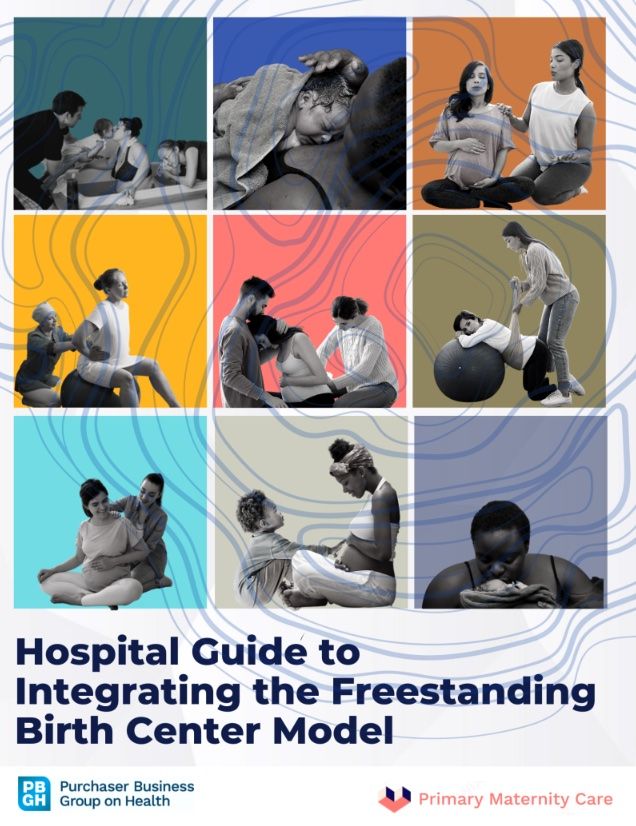
In addition to Step Up Together, Primary Maternity Care (PMC) has developed with industry partners complementary tools that help translate ACOG’s principles into action, including:
Together, these resources recognize that safe transfers depend on systems design, not individual heroics.
ACOG’s new position statement sends an important signal: out-of-hospital birth is part of the maternity care continuum that also includes critical access hospitals and emergency departments, and that transfers deserve serious, respectful attention.
The next step is ensuring that this guidance is implemented in ways that reflect real-world conditions, especially in communities where regulation is inconsistent, relationships are strained, and access to care is fragile.
That’s where Step Up Together will continue to focus our work:
- Bridging gaps across levels and locations of care
- Turning principles into practice
- Strengthening safety, trust, and teamwork — starting in communities
Because safe birth doesn’t depend on where someone plans to give birth. It depends on how well the system shows up when they need it most.