Four Free Tools to Strengthen Your Perinatal Emergency Transfer System
Improving emergency transfers between community birth settings, EMS, and hospitals takes more than having a protocol on file. Teams need a clear process, practical tools to support communication, and opportunities to test how the process works.
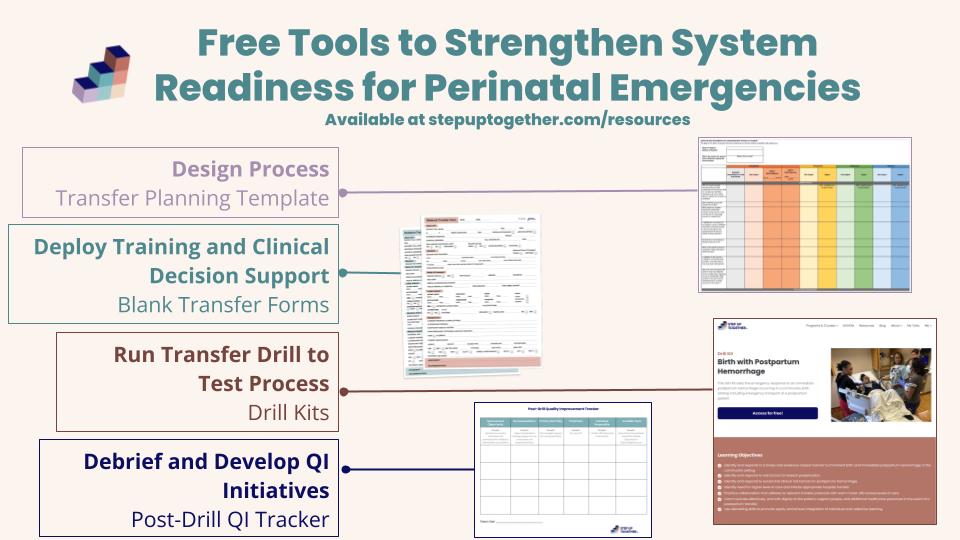
The Step Up Together Improvement Cycle organizes this work into four steps. We have a free tool for each one.
1. Design the Process: Transfer Planning Template
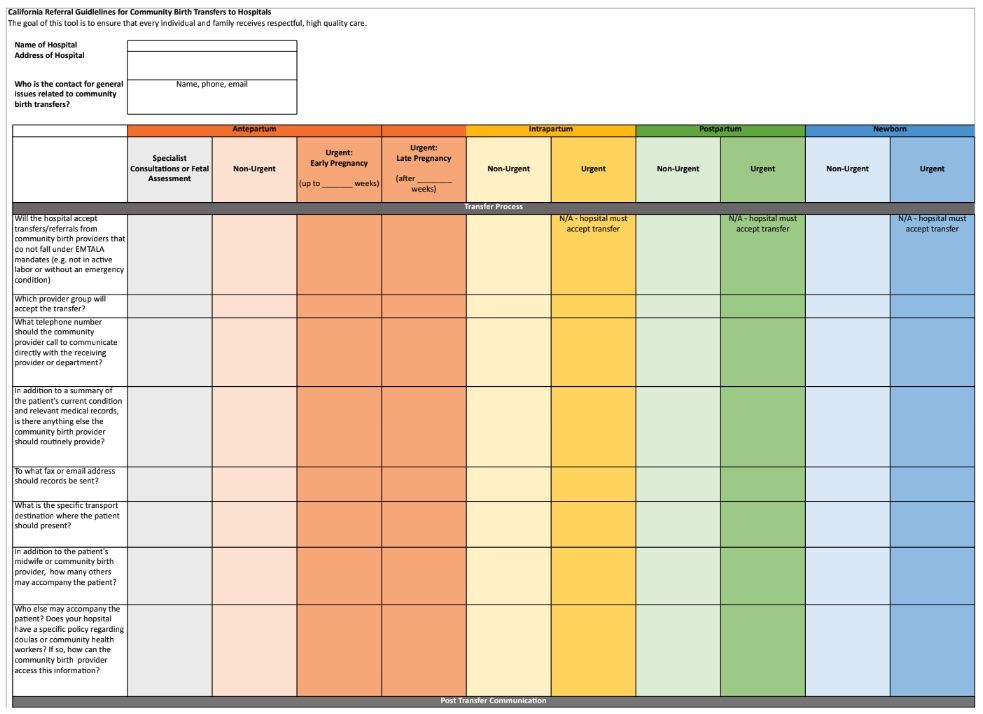
A good transfer process starts before an emergency happens. Hospitals and community birth providers should know what to expect when a transfer occurs: who calls whom, where the patient goes, what information is needed, and how the sending and receiving clinicians communicate.
The free Transfer Planning Template helps teams work through these questions and document an agreed-upon process. Even when organizations already have transfer procedures, completing the template together can uncover areas that need clarification.
2. Support Communication: Transfer Forms
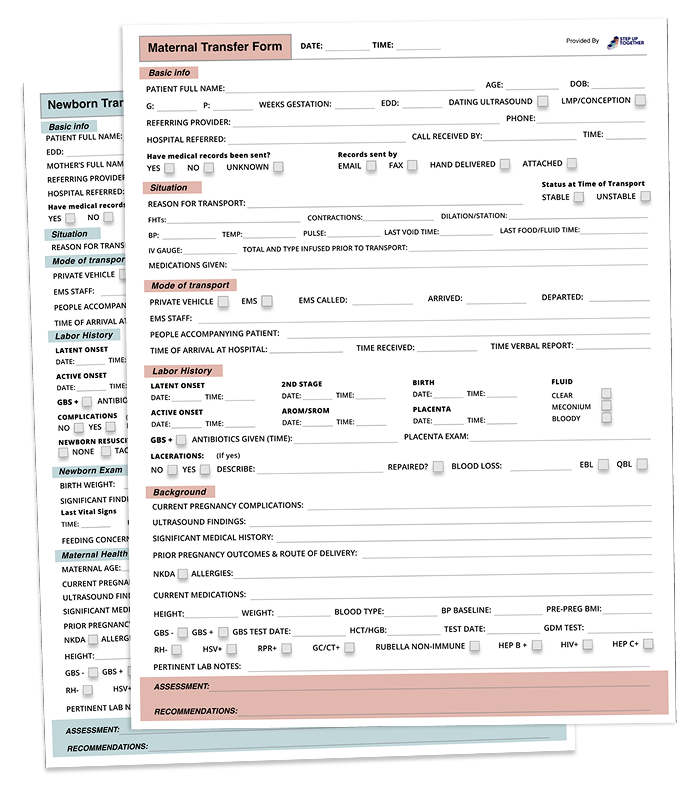
During an emergency transfer, important information has to move with the patient. Standardized documentation can make that handoff easier.
Downloadable Maternal and Newborn Transfer Forms provide a concise format for sharing the clinical information the receiving team needs. Teams can use them as-is or adapt them to fit local workflows.
3. Test the Process: Drill Kits
The best way to find out whether a transfer plan works is to try it.
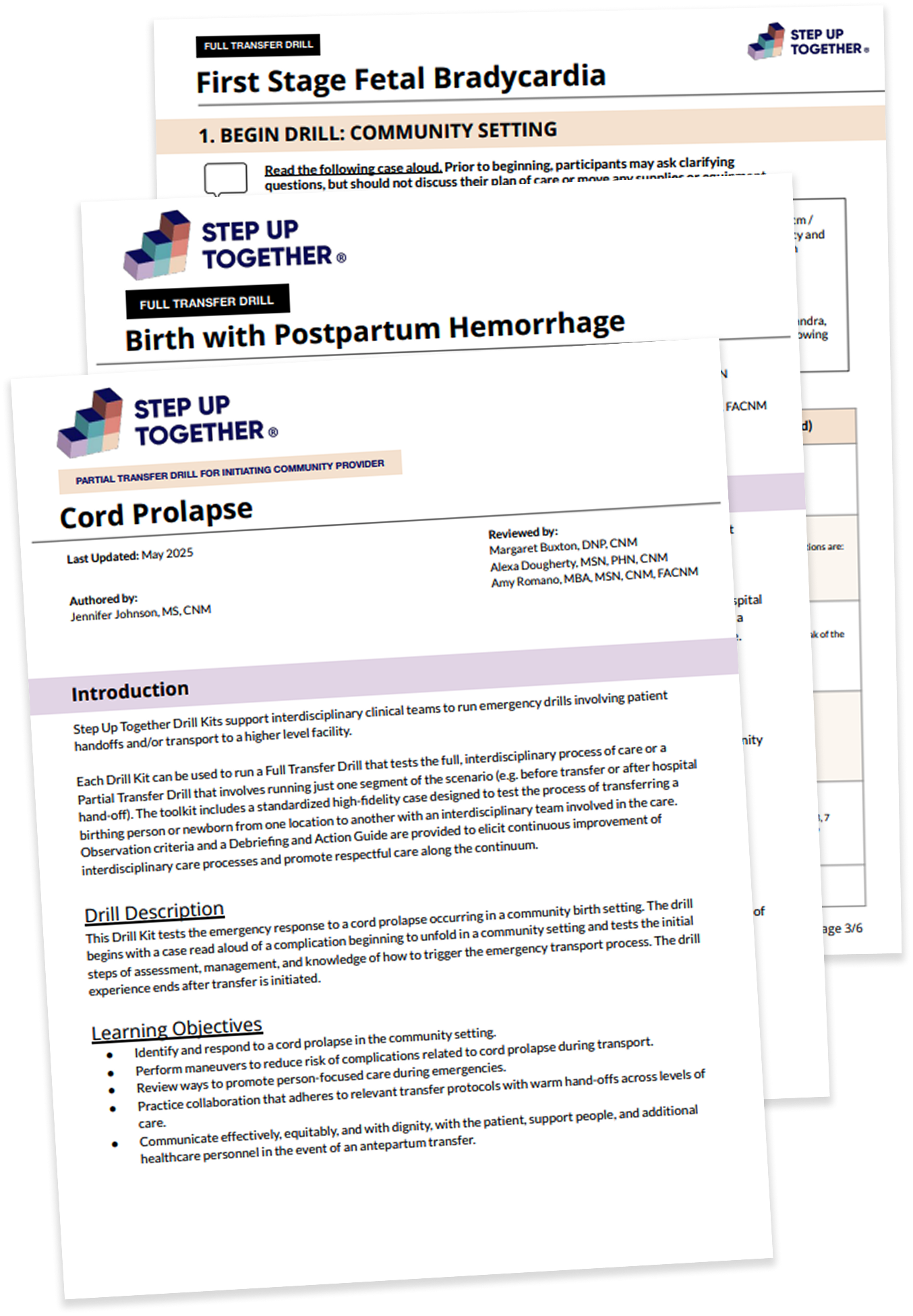
Our Drill Kits provide everything needed to run an interdisciplinary transfer drill, including clinical scenarios, step-by-step instructions, prompts, observer worksheets, and debriefing materials.
Drills give community birth providers, EMS, and hospital teams a chance to practice together and see where the process works well, and where it doesn’t. Teams can run a full transfer drill across settings or use parts of a scenario to focus on a particular piece of the process.
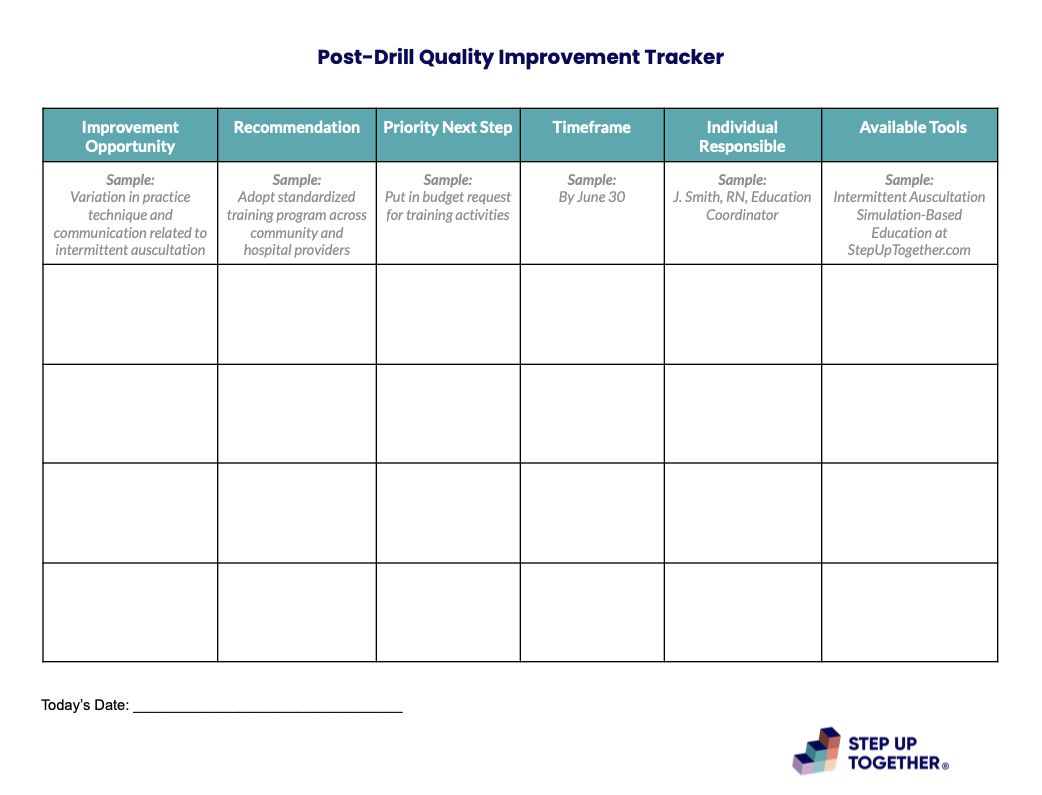
4. Follow Through: Post-Drill QI Tracker
A good debrief usually produces a list of things people want to fix. The challenge is making sure those ideas don’t disappear once everyone goes back to work.
The Post-Drill QI Tracker is a simple way to document recommendations, assign responsibility and timelines, and follow up on progress.
Keep the Cycle Going
These four steps are meant to be repeated. A team might update its transfer plan, introduce a new form or workflow, and then use the next drill to see how the change works in practice.
You don’t need to tackle everything at once. Start with the part of your transfer process that could use attention, bring the relevant partners together, and use the tools that fit the work.