Right-Sizing Your Drill: Finding the Fit for Your Team
There’s nothing quite like the power of a large, truly interdisciplinary Full Transfer Drill. One Massachusetts participant recently reflected:
“There were about 36 participants in yesterday’s drill. 36 individuals who made the commitment to be part of making communication, transport and care better for birthing people, their families and care providers! I am so proud to be part of such a deep and varied community.”
That drill brought togetherarea home birth midwives, EMS providers, hospital team members from multiple departments, hospital administrators, and Department of Public Health officials—an extraordinary example of what it looks like when a whole system shows up to practice together. The learning is rich, and the relationships built can transform real-world transfers.
But we also know that pulling off an operation at that scale isn’t always realistic. Ambulance crews may not have protected time, hospitals may be short-staffed, and midwives are spread thin and can’t always pause their clinical responsibilities.
The good news: drills can beright-sized for the resources you have, while still moving your team toward the goal of a comprehensive Full Transfer Drill.
Option 1:
Simulate the “home birth” in a hospital conference room
Not every team has access to an ambulance or an available birth space. In these cases, a hospital conference room can serve as the simulated home or birth center environment. Recently,Mount Auburn Hospital partnered with Cambridge-area midwivesto run a drill this way. They walked through decision points, activated hospital processes, and practiced communication handoffs right there in the hospital. Next time, they plan to test a newborn scenario and invite their local EMS.
Option 2:
Conduct separate Partial Transfer Drills in each setting
When teams aren’t yet ready or able to run a full-scale transfer, another option is to run Partial Transfer Drills in each setting. Community midwives can simulate a transfer in their practice and invite EMS to join, while hospitals practice their intake processes separately. Both groups then come together for acombined debrief.
Birth Detroitused this approach while their birth center was still under construction, running drills during planning meetings withHenry Ford Health System—literally practicing while the walls were still going up. This early investment in teamwork and process mapping paid off: once the center was ready to open, they went on to conduct a Full Transfer Drill.
Option 3:
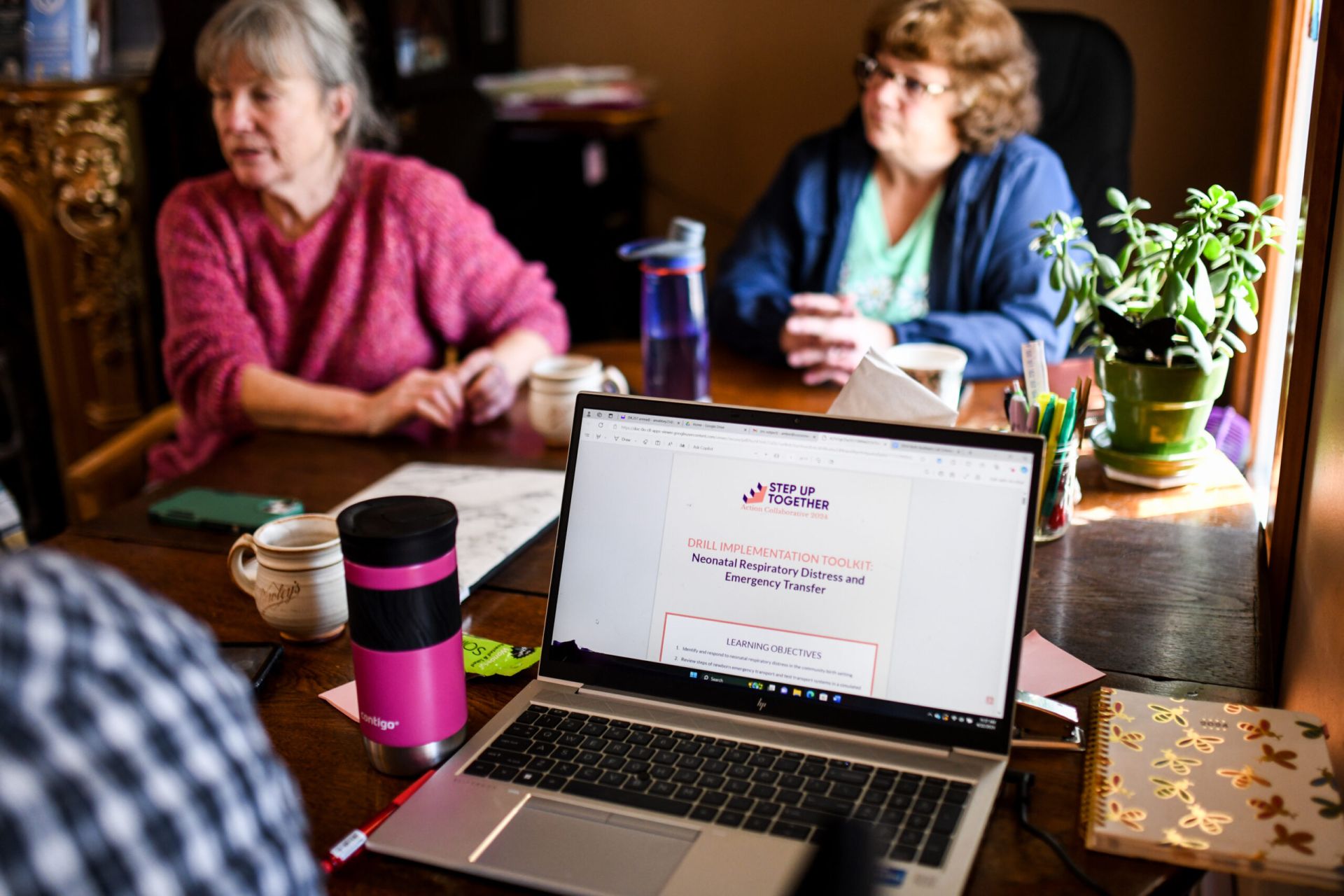
Do a table-read of the drill
Even without a live simulation, teams can sit down together to read through the drill scenario. This helps clarify roles, test communication pathways, and identify potential breakdowns.
In California, severalCMQCC teamsstarted with table-reads over Zoom. Even in that simplified format, they identified process improvements and planned how to get the most out of their eventual live drills. By the time they ran their in-person drills, everyone was better prepared and more focused.
Why These Steps Matter
None of these formats replicate the depth of learning you get from a live Full Transfer Drill with all partners present. But they can still deliver tremendous value by:
Testing and strengthening protocols
Building trust across teams and settings
Identifying quick wins for quality improvement
Creating momentum toward a full, interdisciplinary drill
At Step Up Together, we encourage every team to aim for the “gold standard” of a Full Transfer Drill. But remember: every right-sized step you take strengthens your system, fosters collaboration, and prepares your community for the moments when it matters most.