
In community birth settings like birth centers and home birth practices, emergencies are rare—but when they happen, everyone needs to be ready. That’s why interdisciplinary emergency drills are so critical: they help teams practice protocols, build trust across settings, and make life-saving decisions more efficient under pressure.
At Step Up Together, we’ve seen firsthand how emergency transfer drills can improve outcomes and relationships. But one question we often hear is: “Do we really have to do a Full Transfer Drill?”
The short answer? No. But you should do something. And with the right tools, even a two-person role-play at the start of a shift can be meaningful.
Let’s break down the differences between Partial Transfer Drills and Full Transfer Drills, and how you can use Step Up Together resources to strengthen your team’s preparedness—no matter your size, setting, or stage of readiness.
Partial Transfer Drills in the Community: Start Small, Go Deep
What they are:
Partial Transfer Drills in the community simulate the emergency scenario and transfer decision-making, but don’t involve actual transport or hospital-based participation. These drills often stop at the point of calling EMS or activating the transfer.
When they work well:
- New to simulation or transfer planning
- Limited availability from EMS or hospital partners
- Time-constrained staff or low census days
- As orientation or periodic training for individual staff
Benefits: Low lift, high value Builds habits and confidence in early recognition and decision-making Tests internal protocols and readiness (equipment, documentation, communication)
Drawbacks: Doesn’t test real-time coordination with EMS or receiving facility Doesn’t surface logistical issues in transport or handoff May overlook interdisciplinary dynamics under pressure
Partial Transfer Drills in the Hospital: Simulate the Arrival
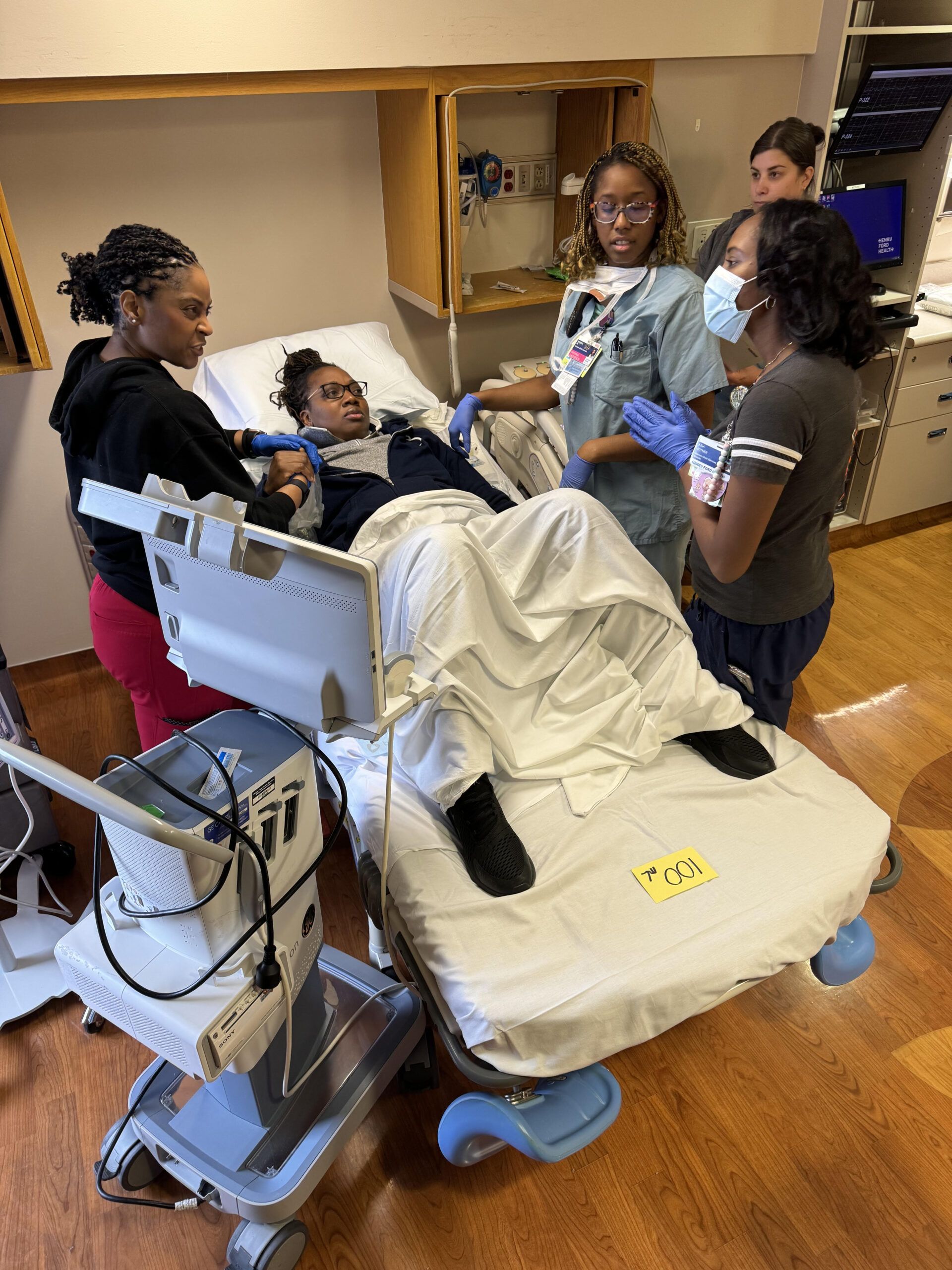
Full Transfer Drills: Stress-Test the System
What they are:
Full Transfer Drills simulate the entire emergency—from the moment of clinical recognition through EMS dispatch, real-time transport, and arrival at the hospital or NICU. These require coordination across multiple teams and often involve 10 to 30+ participants.
When they work well:
- Strong baseline collaboration with hospital and EMS
- Dedicated time and resources
- Preparing for accreditation or quality improvement projects
- Training a new team or onboarding EMS
Benefits: Builds shared understanding across roles and settings Strengthens interprofessional communication Identifies real-life gaps in readiness, policies, or equipment Meets CABC expectations and elevates trust
Drawbacks: Requires substantial coordination and buy-in Can be logistically complex and resource-intensive Difficult to schedule for all disciplines simultaneously
No Matter the Drill, You’re Not Alone
Step Up Together was designed to support you—whether you’re running a tabletop with one midwife and one nurse or conducting a full-scale drill with EMS, OBs, NICU staff, and hospital administrators. Here’s how to tailor our tools to your context:
 Drill Kits
Each kit includes everything you need to run either type of drill: a clinical scenario, setup instructions for Partial and Full Transfer Drills, observer worksheets, a debriefing guide, and a reporting form. You can access scenarios like Neonatal Resuscitation, Postpartum Hemorrhage, Cord Prolapse, and more. Access Free Drill Kits.
 Action Collaboratives
If you’re looking for structure, camaraderie, and coaching, join an Action Collaborative. These multi-month programs bring together interdisciplinary teams that are committed to running Full Transfer Drills who plan and learn together and participate in powerful Community Debriefing sessions to share lessons learned across the network. (Pro tip: This is where most participants conduct their first Full Transfer Drill!) Sign up for an upcoming Action Collaborative.
 Coaching and Technical Assistance
Step Up Together Faculty can work directly with your organization to customize Drill Kits to your care setting or provide individualized coaching or technical assistance to help you run your drill and turn it into sustainable quality improvement. Reach out to inquire about technical assistance packages available. info@stepuptogether.com
From “We Should” to “We Did”