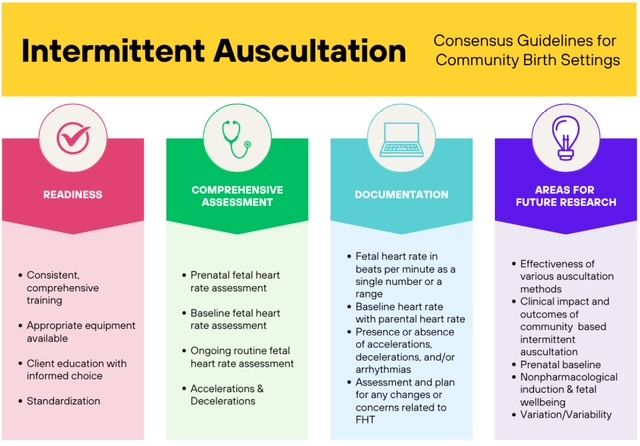
We’re proud to share that new national guidelines for fetal assessment using intermittent auscultation (IA) in community birth settings have just been published in Birth: Issues in Perinatal Care. These midwifery-led, peer-reviewed guidelines mark a critical step toward strengthening safety, clarity, and collaboration in home and birth center birth.
The new guidelines were developed through a volunteer consensus process led by community midwifery leaders, with contributions from clinicians, researchers, and educators across professions. I participated in the development of the guidelines, and using funding from the Massachusetts Department of Health, we have ensured the guidelines are open-access and embedded in system improvement efforts across levels and locations of care. This reflects our our deep commitment to aligning clinical education and systems change with the evolving evidence base and best practices for community birth.
Why These Guidelines Matter
Resources to Support Implementation
At Step Up Together, we believe that guidelines are only as useful as the support teams receive to implement them in practice. That’s why we’ve developed free and low-cost resources to bring the new IA guidelines to life:
 The Intermittent Auscultation Simulation-Based Education Course
Our one-hour, self-paced course builds critical fetal assessment skills and allows learners to demonstrate competency through realistic audio-visual simulations. It’s a practical, accessible option for midwives, nurses, students, and interprofessional teams across all birth settings. Enroll now →
 Drill Kits for Bradycardia and Other Emergencies
Our Drill Kits support interdisciplinary teams in rehearsing effective, timely responses to abnormal fetal heart rate findings like bradycardia—one of the key scenarios addressed in the new guidelines. These kits are free and open-access, designed specifically for use in simulating transfers from community birth settings. Access Drill Kits →
What’s Next
We’re thrilled to see the publication of these guidelines and are already working to support their widespread uptake with training, drills, and technical assistance provided through Step Up Together and our collaborators. If you’re a birth center, midwifery practice, EMS partner, or community health leader ready to bring these standards to life, we invite you to explore our resources, or get in touch to collaborate.